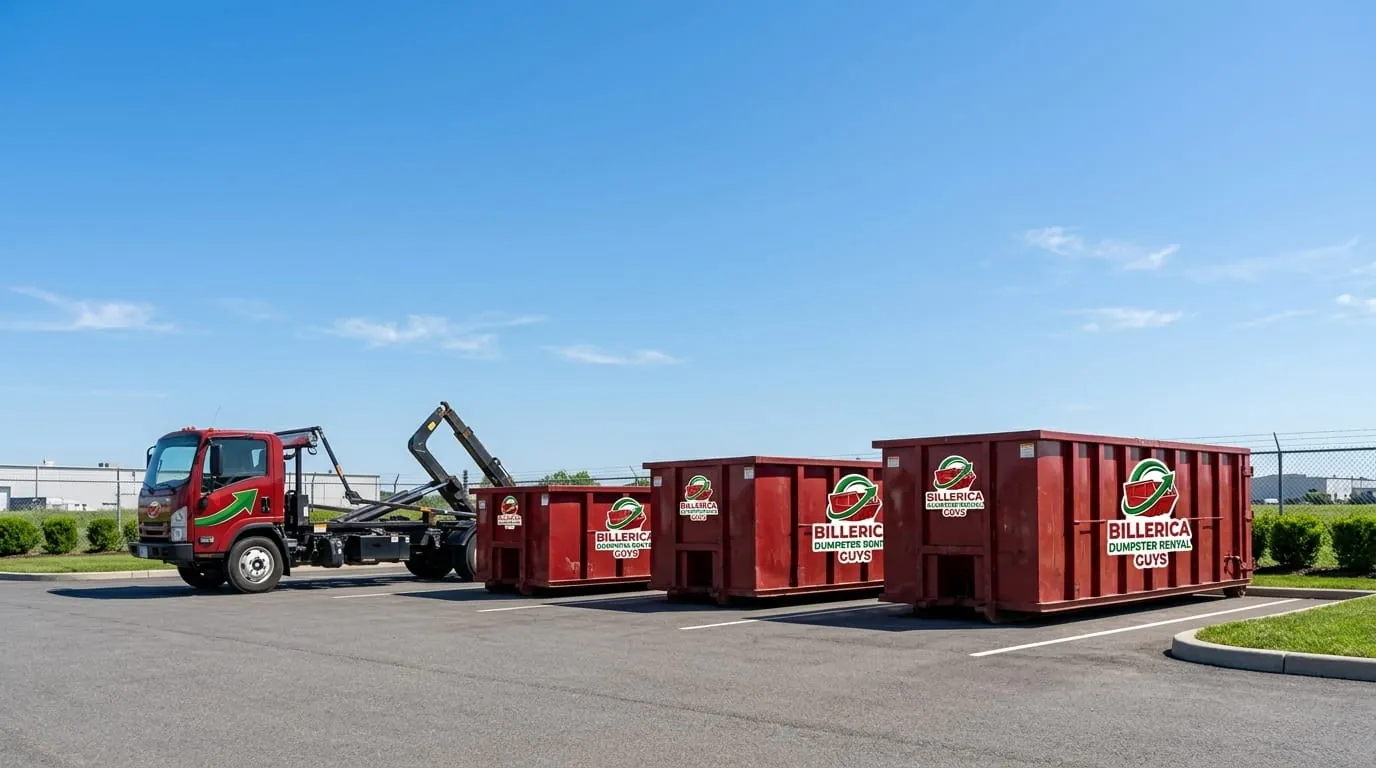
Every tear-out looks the same on day one: a clean dumpster in the driveway and a crew ready to fill it. By day three it's a different story. The bin is stuffed, the corner of a bathroom remodel is jammed with soggy drywall, and somebody tossed a half-bag of thinset in there that pushed the whole load over weight. I've been hauling construction and demolition debris around Billerica and the Merrimack Valley long enough to know that the difference between a smooth job and an expensive one usually comes down to how the debris got sorted before it ever hit the container.
This guide is the version I'd give a contractor over coffee. No fluff. Just how to handle C&D the right way in Massachusetts, keep your loads legal, and avoid the surprise fees that eat into a job's margin.
First, understand what "C&D debris" actually covers
Construction and demolition debris is a broad bucket, and that's part of the problem. It lumps together material that behaves nothing alike. Wood framing weighs a fraction of what the same volume of concrete does. Drywall crumbles and turns to paste when it rains. Metal is worth money at the scrapyard. Asphalt shingles are dense, heavy, and banned from regular recycling streams. Treating all of it as one undifferentiated pile is the fastest way to overpay.
Here's how I'd break down the common streams on a typical Billerica remodel or tear-off:
- Wood — framing lumber, sheathing, trim, subfloor, and pallets. Clean, untreated wood is light and often recyclable. Pressure-treated and painted wood is trash, not recycling.
- Drywall — gypsum board. Light when dry, heavy and messy when wet. Keep it covered.
- Metal — copper pipe, steel studs, ductwork, rebar, old appliances, aluminum trim. This has scrap value. Pull it out.
- Concrete, brick, block, and asphalt — the heavy stuff. Also called clean fill or inert material. This does not belong in a mixed roll-off.
- Asphalt shingles — a category all their own. Dense, and in Massachusetts, banned from disposal in most transfer stations if not separated.
Massachusetts has real C&D disposal bans — and they're enforced
This is where a lot of out-of-state advice falls apart. Massachusetts runs one of the more aggressive waste-ban programs in the country through MassDEP, and several C&D materials are prohibited from landfill and incinerator disposal. That means they have to be separated for recycling, not buried in a mixed load.
The banned C&D materials most contractors run into are asphalt pavement, brick, and concrete (ABC), metal, wood, and clean gypsum wallboard. As of the tightened rules, the state expects these to be diverted. Facilities that accept C&D are required to screen incoming loads, and a contaminated load can get rejected or hit with a surcharge that lands right back on you.
The practical takeaway: if your load is a jumbled mix of drywall, wood, metal, and old shingles with no separation, you're working against the grain of how MA facilities are set up. Sorting isn't just tidy — it's how you stay compliant and keep tipping fees predictable. A good local hauler already has relationships with processing facilities that separate mixed C&D, but the cleaner your material goes in, the less you pay on the back end.
Roll-off vs. heavy-debris bin: pick the right container
This is the single most common mistake I see, and it's an expensive one. People order one big 30-yard roll-off for everything, then start throwing concrete and brick into it. That container will hit its legal weight limit long before it looks full — and now you've got a half-empty dumpster you're paying overage on.
Volume and weight are two different constraints. A standard roll-off is built for volume: bulky, relatively light material like wood, drywall, insulation, cardboard, and general remodel debris. A heavy-debris bin is built for weight: concrete, brick, block, asphalt, dirt, and stone. These are smaller containers — typically 10 or 12 yards — precisely because you'll max out the tonnage well before you fill the box.
My rule of thumb for anyone doing a mixed project: order two containers when you've got both streams. Put the heavy inert material in a dedicated small bin and keep your big roll-off for the light, bulky stuff. It sounds like more money up front. It almost always ends up cheaper than one overloaded roll-off with overage charges and a rejected load. If you're not sure which mix fits your job, that's a two-minute phone call — we do it every day. For most standard remodels and tear-outs, a construction dumpster rental in the 20 to 30-yard range handles the volume, and you add a heavy bin only if concrete or masonry is involved.
Keeping a dumpster under its weight limit
Every roll-off comes with an included tonnage allowance. Go over it and you pay per ton on top of the rental — and those per-ton rates aren't friendly. Here's how the guys who never get surprised do it.
- Keep water out. Wet drywall and wet wood can double in weight. Tarp the container overnight and before rain. A soaked load is money you're literally hauling for free.
- Never mix heavy inert material into your volume bin. One wheelbarrow of concrete can throw off the whole ticket. Concrete, brick, and dirt go in the heavy bin — every time.
- Load flat and layer. Break down large items so they lie flat. Air pockets waste volume, and a poorly loaded bin fills up before it's actually full.
- Pull the metal. Set steel, copper, and aluminum aside. It's weight you don't want in the bin and value you can recover at a scrap yard.
- Know your shingle math. A single square of asphalt shingles runs 200 to 350 pounds. A full re-roof will blow through a weight limit fast, which is why shingles usually want their own dedicated container.
Not sure whether your load is going to go over? Call us before you fill the bin, not after. (978) 330-1722. Two minutes on the phone can save you a few hundred dollars in overage.
Sorting on the job site: a system that actually holds up
Sorting only works if the system survives a busy crew. Ask guys to walk debris to five different piles and it falls apart by lunch. Keep it simple and physical.
Set up staging before demo starts. A metal pile on a tarp near the truck. A dedicated spot for clean wood if you're diverting it. The heavy bin positioned close to where the concrete work is happening so nobody's tempted to shortcut it into the big roll-off. Then put the roll-off where the volume of the work is. Distance is the enemy of sorting — the farther someone has to carry something, the more likely it ends up in the wrong container.
One more thing that pays off: brief the crew once, out loud, on day one. "Concrete and brick in the small bin. Metal on the tarp. Everything else in the big one." That sentence, said clearly, prevents most contamination. New guys especially will just throw things wherever unless someone told them the rule.
Fast swaps and keeping the job moving
On a tight schedule, a full dumpster that can't get emptied is a stopped job. The contractors who keep moving do a few things differently.
They call for the swap before the bin is completely maxed — when it's about three-quarters full, not overflowing. An overfilled container can't be hauled legally; if debris is above the top rail, we can't strap it and take it, and now you've lost a day. They keep the container accessible, with a clear path for the truck and nothing parked in front of it. And they think a day ahead about swaps rather than calling in a panic at 4 p.m. A local outfit can usually turn a same-day or next-day swap in Billerica, Chelmsford, Tewksbury, and around the Valley — but only if there's a truck free and the bin is loaded right.
Placement matters more than people expect. Put the container where the truck can get to it and where you're not blocking your own work. On a driveway, lay down plywood under the wheels if you're worried about the surface. And leave overhead clearance — the arm on a roll-off truck needs room to lift.
What doesn't belong in any C&D dumpster
Even a well-sorted C&D load has hard exclusions. These will get a load rejected or land you a hazardous-waste fee, so keep them out entirely:
- Asbestos-containing material — old pipe insulation, certain floor tiles and mastics. This requires licensed abatement, full stop.
- Paint, solvents, adhesives, and other liquids.
- Fluorescent bulbs, ballasts, and anything with mercury.
- Propane tanks, aerosols, and pressurized cylinders.
- Appliances with refrigerant, unless it's been professionally recovered.
- Tires and electronics — both are banned from disposal in MA and need separate handling.
If you're not sure whether something qualifies, ask before it goes in. It's a lot cheaper to get an answer than to have a whole load flagged at the scale.
The short version
Dispose of C&D the right way and it barely registers as a line item. Do it wrong and it becomes the thing that blew the budget. Separate your heavy inert material from your volume debris. Keep water out. Pull the metal. Respect the Massachusetts waste bans — they're real and they're enforced. Order the right container for the right stream instead of forcing everything into one box. And when you're staring at a pile and not sure how to split it, pick up the phone.
We handle construction debris across Billerica and the Merrimack Valley every week, and we're happy to talk through the right setup before you order. Reach out through our contact page or call and we'll get you sorted — literally.
Founder, Billerica Dumpster Rental Guys — sharing straight advice from more than 15 years of local hauling experience.