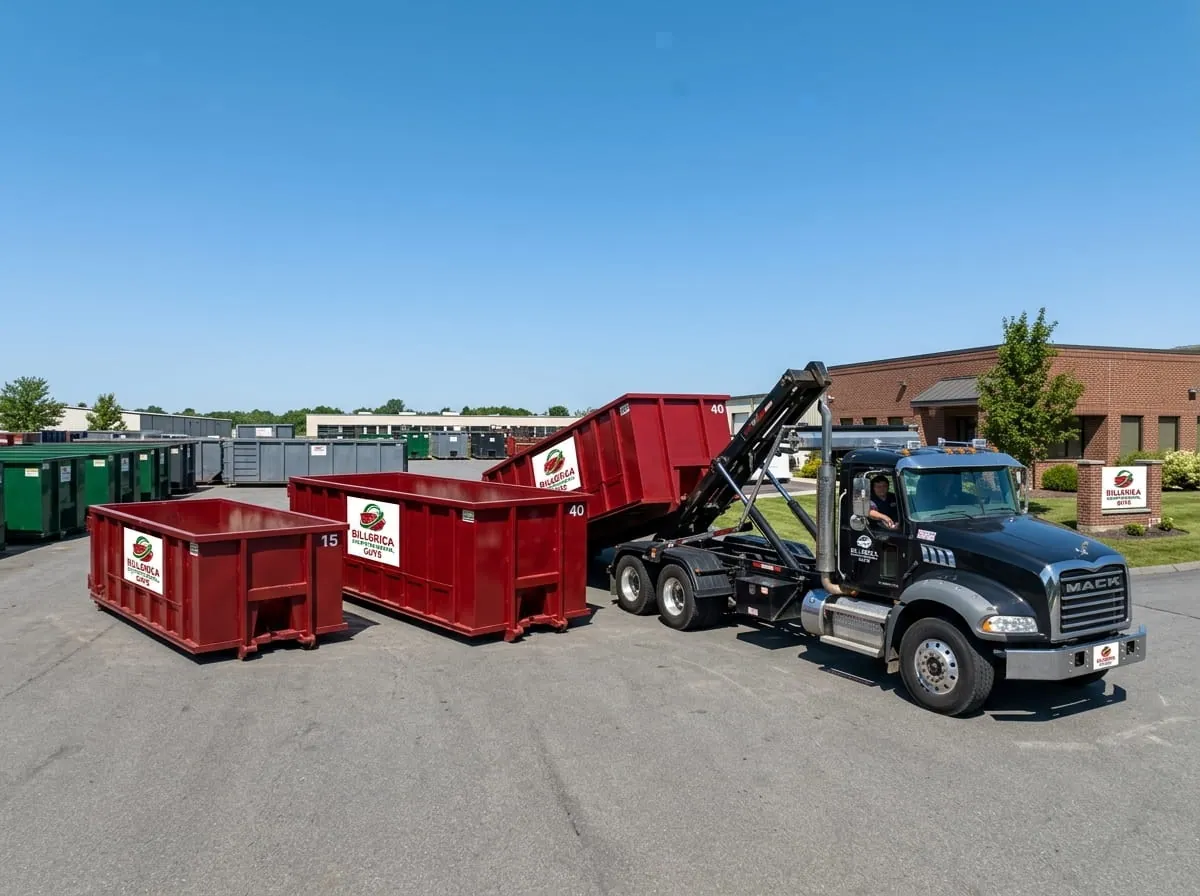
Ask ten people what size dumpster they need and you'll get ten guesses, most of them wrong. It's the single question we field more than any other, and honestly, it's the one worth getting right. Order too small and you're paying for a second haul or watching junk pile up next to a can that's already full. Order too big and you've got a 22-foot steel box eating your driveway for a week, plus you paid for air. After years of dropping roll-offs across Billerica, Chelmsford, Tewksbury and the rest of Greater Lowell, I can usually size a job over the phone in about ninety seconds. This guide gives you the same shortcuts.
How roll-off sizes actually work
The number on a dumpster is its volume in cubic yards. A 20-yard box holds roughly 20 cubic yards of loose material. That part's easy. What trips people up is that volume and weight are two different limits, and you can blow past the weight cap long before the box looks full.
Here's the rule of thumb we live by: light, bulky stuff (drywall, cabinets, deck boards, furniture, general household junk) fills a box by volume. Heavy, dense stuff (dirt, concrete, asphalt shingles, tile, brick) hits the weight limit way before the top. A 10-yard box can look half-empty and still be over tonnage if you fill it with old roof shingles. More on weight in a minute, because in New England it's the thing that surprises folks most.
The 10-yard: small, dense, or tight on space
A 10-yard runs about 12 to 14 feet long and holds the equivalent of three or four pickup truck loads. It's the go-to for concentrated, heavy jobs and small cleanouts. Think a single-room flooring tear-out, a small bathroom gut, a load of dirt from a landscaping dig, or a modest garage purge. If your driveway is short or you've got a low tree line, the 10 tucks in where bigger boxes won't.
Where people misjudge the 10: they see "10 yards" and picture a lot of room, then load it with a whole basement of junk and run out of space in an afternoon. For pure junk volume, it's small. For anything heavy, it's often exactly right.
The 15-yard: the underrated middle
The 15 is the size nobody asks for by name and half of them actually need. It splits the difference: enough capacity for a two- or three-room cleanout, a small deck teardown, or a bathroom-plus-hallway remodel, but with a higher weight allowance than the 10 and a footprint that still fits a normal suburban driveway. If you're torn between a 10 and a 20, the 15 is frequently the honest answer. We keep plenty on the truck for exactly that reason.
The 20-yard: the workhorse
If we sold only one size, it'd be this one. The 20-yard is the default for the majority of homeowner projects in the Merrimack Valley. It's about 22 feet long, holds roughly eight pickup loads, and swallows a full basement or attic cleanout, a garage that's been collecting for twenty years, a big deck removal, or a kitchen remodel with cabinets, counters and flooring. The walls are low enough that you can walk debris in over the side or use the swing door on the back rather than heaving everything up and over.
Most one- and two-room remodels, most estate and moving cleanouts, most "we finally dealt with the whole house" weekends land in a 20. If you genuinely don't know, and the material is normal household or renovation debris, this is the safe pick. You can read the full breakdown on our 20-yard dumpster page.
Not sure between two sizes? Call us at (978) 330-1722 and describe the pile. We size jobs over the phone every day, and it costs you nothing to ask.
The 30-yard: big demo and whole-house jobs
The 30-yard is a serious box, around 22 feet long but noticeably taller, and it's built for volume. Whole-house renovations, large additions, multi-room gut jobs, big construction debris, or a commercial cleanout. If you're a contractor running a real project or a homeowner tackling something that touches the whole house at once, the 30 keeps you from ordering two smaller cans. It needs room, though, both for the box and for the truck to set it down and pick it up, so it's not the right call for a cramped city lot. Details are on the 30-yard dumpster page.
Weight limits: the New England reality check
This is where I'll save you money. Every roll-off comes with an included tonnage allowance, and going over it means overage charges by the ton. For light debris you'll almost never hit it. For heavy material, you'll hit it fast, and around here "heavy" shows up in ways people forget.
- Asphalt shingles: a single-layer tear-off on an average roof is deceptively heavy. A stripped roof can max out a small box on weight alone.
- Dirt, sod and fieldstone: our soil is dense and full of rock. A few yards of excavated dirt weighs a ton, literally.
- Concrete, brick, tile and old plaster: that horsehair plaster in older Billerica and Lowell homes is brutally heavy compared to modern drywall.
For dense material, we'll often steer you to a smaller box on purpose, not to upsell you but because a 10-yard filled halfway with concrete is safer, legal to haul, and cheaper than a 20 you overloaded. If your project mixes heavy demo with light junk, tell us. We'll help you separate loads so you're not paying overage on the whole thing.
Quick reference: sizes at a glance
If you just want the shorthand before you read the project breakdowns, here's how we sort it in our heads when the phone rings:
- 10-yard: one small room, heavy/dense debris, tight driveways, small landscaping digs.
- 15-yard: two to three rooms, small deck, single bath plus a hallway, the honest in-between pick.
- 20-yard: full basement, attic or garage cleanout, average deck, kitchen remodel. The default.
- 30-yard: whole-house renovation, additions, multi-room gut, big construction or commercial debris.
Sizing common Merrimack Valley projects
Basement and attic cleanouts
Old furniture, boxes, holiday decorations, that treadmill nobody used. It's bulky but light. A single-room cleanout can fit a 15; a full basement or attic almost always wants a 20. Estate cleanouts where you're clearing a whole house usually run a 20 at minimum, sometimes a 30.
Garage cleanout
A one-car garage that's just cluttered fits a 15. A two-car packed to the rafters with old tools, tires, lumber and lawn gear leans toward a 20. Watch for hazardous items (paint, oil, propane, tires) that can't go in the box; ask us what's allowed before you load.
Deck teardown
Deck lumber is bulkier than it looks once it's pried apart and the boards are lying loose. A small ground-level deck can go in a 15. An average two-story deck with railings, joists and stairs is comfortably a 20. Pressure-treated wood is fine in the box; just don't burn it.
Kitchen and bath remodels
A single bathroom gut, tile, vanity, tub, flooring, fits a 10 or 15, and remember tile and old plaster push the weight up. A full kitchen with cabinets, countertops, appliances and flooring is a solid 20. If you're doing kitchen and bath together, or the whole first floor, jump to the 30 rather than juggling two cans.
Delivery, timing and a few local details
Size isn't the only thing worth thinking about before the truck rolls out. A standard rental period covers most homeowner projects comfortably, but demo always takes longer than the weekend you blocked off, so build in a cushion and don't rush a full box out the door on day two. If your project runs long, a quick call to extend is far cheaper than the stress of racing a deadline.
A couple of local notes. If the box is going in the street rather than your driveway, some towns in the Merrimack Valley require a permit, and that's on the homeowner to check with the town before delivery. On your own property you're generally clear. We put down boards under the feet to protect asphalt and pavers, and we'll always talk through placement so the box lands where it's actually useful, close to the work, not blocking the cars you need every morning. Little things, but they're the difference between a smooth week and a headache.
How to avoid over- and undersizing
A few habits keep you out of trouble. Break bulky items down (deck sections, furniture, cabinets) so they nest instead of bridging across the box and wasting the space underneath. Load heavy debris flat on the bottom, junk on top. Be honest with yourself about scope; the project always generates more waste than the mental picture. And when you're genuinely between two sizes, size up on light material and size down on heavy material. That one line covers ninety percent of the decisions.
The other move is just to call. We've dropped boxes at thousands of driveways in Billerica and the surrounding towns, and a two-minute conversation about what you're throwing out beats any online calculator. Reach us anytime at our contact page or by phone, and we'll get you the right box the first time.

Founder, Billerica Dumpster Rental Guys — sharing straight advice from more than 15 years of local hauling experience.