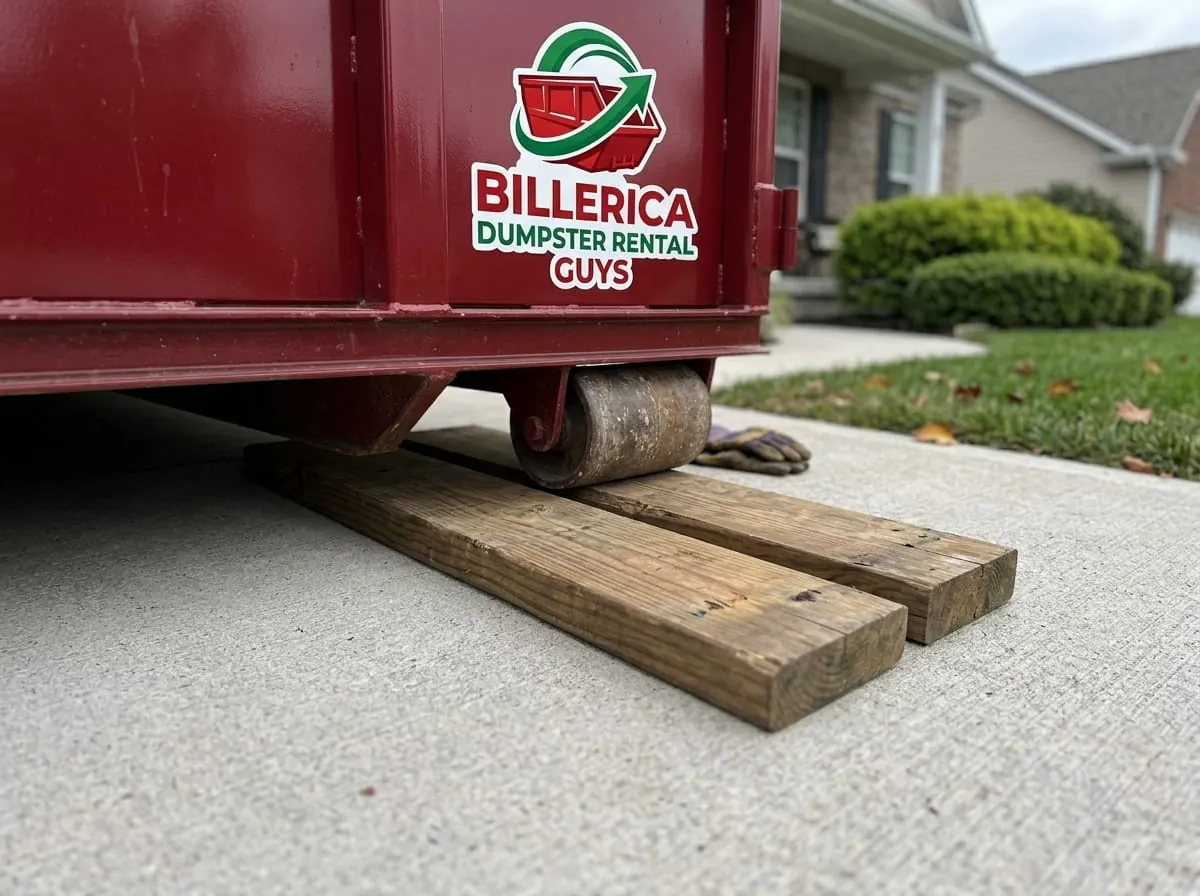
Somewhere in Billerica right now there's a two-family with a basement nobody has fully seen since the Clinton administration. I know because I've been in a hundred of them. Cleaning out a house around here isn't a Saturday project you knock out between coffee and the game. It's decades of a family compacted into rooms, and half of it is stacked against a fieldstone foundation that's been damp since the last ice age.
So let's do this the way a crew actually does it. Room by room, with a real plan, and a dumpster sized so you're not making three trips to the transfer station in your neighbor's pickup.
Start with the plan, not the pile
The single biggest mistake I see: people wade into the middle of the house and start opening boxes. Four hours later they're crying over a shoebox of old photos and nothing has left the building. Don't do that.
Work from the outside in and top to bottom. Attic first, then bedrooms and closets, then the main floor, then the basement and garage last. There's a reason. The heavy, ugly, structural stuff lives low and you want that dumpster parked and open before you get there. Give yourself a staging zone too, usually the garage or the driveway, where three piles live: keep, donate, toss. Every single item goes into one of those three. No "maybe" pile. Maybe is how you end up putting everything back.
The attic: hot, tight, and full of surprises
New England attics are brutal in summer and they're where the fragile, forgettable stuff goes to hide. Christmas decorations, insulation batts, old suitcases, boxes of tax returns from businesses that closed in 1994.
Go up early in the morning before it turns into an oven. Watch your footing. In older Billerica homes the attic isn't floored, it's joists with blown-in or batt insulation between them, and one wrong step puts your leg through the ceiling of the bedroom below. Lay down a sheet of plywood to kneel on and move it as you go.
What actually comes out of attics: mouse-chewed cardboard (toss, and wear a mask, mouse droppings are no joke), old fiberglass insulation if you're upgrading (bag it, it's an irritant), broken artificial trees, and the occasional genuinely good find. Cedar chests, vintage tools, a box of letters. Slow down for those. Speed up for everything the mice got to.
Bedrooms and closets: the fast wins
After the attic, bedrooms feel easy, and you need an easy win to keep momentum. Clothes are the big one. The honest rule: if nobody's worn it in two years and it isn't seasonal or sentimental, it goes to donate. Textiles in decent shape are gold for donation centers. Stained, torn, or moldy fabric is trash, not somebody else's problem.
Closets hide the real volume. Shoes, board games with missing pieces, that closet-shelf archive of electronics chargers for devices you no longer own. Toss the chargers. Nobody needs 40 of them. Old mattresses are their own headache in Massachusetts, more on that in a second.
Furniture worth keeping or donating should be structurally sound and clean. A solid dresser someone will use, sure. A particleboard nightstand that's swollen from a spilled drink is not a donation, it's a toss, and pretending otherwise just makes the donation center pay to dump it.
The kitchen: heavier than it looks
Kitchens fool people. It's just dishes, right? Then you're carrying out a cast-iron enameled pot, a countertop microwave, three coffee makers, and a junk drawer that weighs 15 pounds on its own.
Donate: matching dishware, unopened pantry goods (food banks take sealed non-perishables), small appliances that still work. Toss: chipped and cracked ceramics, scratched nonstick pans, anything with a frayed cord. Appliances are where you have to think. Refrigerators and freezers with a compressor need the refrigerant handled, so those often can't just go in a general dumpster, they go through junk removal or an appliance recycler. Call and ask before you assume. Same with anything holding freon.
Living areas and the main floor
By now you've got a rhythm. Main floors are big furniture and years of accumulated flat-surface clutter. Sofas and recliners are the tough ones, heavy, awkward, and rarely worth donating once they've got wear. Break them down if you can. A sawzall through a couch frame turns an unliftable monster into three manageable pieces that stack flat in the dumpster and save you a mountain of airspace.
Electronics pile up here. Old tube TVs, stereos, a tangle of DVD players. Massachusetts bans CRT TVs and monitors from the regular trash, so those need to go to an electronics recycler, not the dumpster. Keep a separate box for e-waste as you go and you'll thank yourself later.
The basement: the main event
This is where the job is won or lost. Around here basements are damp, low-ceilinged, and packed floor to rafter. Paint cans, garden chemicals, water-damaged boxes, a workbench buried under 30 years of "I'll fix that someday."
Damp is the theme. Cardboard that's been sitting on a concrete floor is often soft, moldy, and heavy with moisture. Mask up, gloves on, and don't shake things around more than you have to. Mold spores in an enclosed basement are a real respiratory hit. Prop the bulkhead open and get some air moving.
Hazardous stuff lives down here and it does NOT go in the dumpster: old paint, stains, solvents, motor oil, pesticides, propane tanks, car batteries. Billerica and most Merrimack Valley towns run household hazardous waste collection days, usually a few Saturdays a year. Set that material aside in a milk crate and run it to the collection event. Dumping it is illegal and it can get a whole load rejected at the transfer station.
Everything else, the water-logged boxes, the broken furniture, the rusted shelving, that's your bulk tonnage and it's exactly what the dumpster is for.
The garage: heavy metal and dry rot
Garages are the easiest to sort because so little of it is sentimental. Rusted tools, dead lawn mowers (drain the gas and oil first, or set it aside for scrap), coils of hose, half-used bags of concrete that have gone rock-hard. Scrap metal is worth pulling aside, a scrapper will often take it free and you keep the weight out of your load. Tires are a special case in Massachusetts, most transfer stations charge per tire and they can't go in a mixed dumpster, so handle those separately.
Sorting that actually works: keep, donate, toss
Here's the field-tested version of the three-pile system:
- Keep means you have a specific place for it in the new setup. Not "it's nice." A place.
- Donate means it's clean, functional, and something a real person would actually want. Be honest. Donation centers throw out a shocking amount of what people drop off.
- Toss is everything else, and it's usually 60 to 70 percent of a real cleanout. That's normal. That's the whole reason the dumpster is in the driveway.
Move the toss pile to the dumpster continuously. Don't let it build up in the yard. A pile in the driveway is a decision you have to make twice.
Renting a dumpster in Billerica or the Merrimack Valley? Talk to a real person who knows the local transfer stations and what they will and won't take. Call Billerica Dumpster Rental Guys at (978) 330-1722 and we'll help you size it right the first time.
Picking the right dumpster size
This is the question everybody gets wrong, and it costs them. Undersize it and you're renting a second one. Oversize it and you paid for air.
Rough guide from doing this for years:
- 10-yard: single room, a small basement, or heavy debris like tile and concrete where weight caps out fast.
- 20-yard: the workhorse for a full home cleanout. A whole-house declutter, a large basement plus garage, a couple rooms of furniture. Nine times out of ten this is the one I put in a Billerica driveway for a cleanout. Look at the 20-yard dumpster if you're doing the whole house.
- 30 and 40-yard: full estate cleanouts, hoarding situations, or a house that's been in the family 50 years and never thinned out.
One warning specific to cleanouts: weight limits. A dumpster full of wet basement boxes, old plaster, or dense junk hits its tonnage cap way before it looks full. Tell whoever you rent from that it's a cleanout with damp material, and they'll set the right size and limit so you don't get hit with overage fees.
Safety, because the ER visit ends the project
Old houses fight back. A few things I make my crews do, and you should too:
- Gloves and closed-toe boots, always. Old wood is a nail farm.
- Lift with two people on anything awkward. A tube TV, a full filing cabinet, a cast-iron radiator, those hurt backs every year.
- N95 mask in attics and basements. Dust, mold, and mouse mess are the real hazards, not the heavy stuff.
- Don't stack a dumpster past the rails. An overloaded box can't legally be hauled and it becomes your problem again.
- Take breaks and hydrate, especially in a July attic. Heat exhaustion is sneaky.
Pace it and finish it
A full house cleanout is realistically a long weekend to a full week, depending on how buried it is and how many hands you've got. Get the dumpster there day one, work the plan top to bottom, keep the toss moving, and set the hazardous and e-waste material aside as you find it. Do that and the thing that felt impossible on Friday is a swept, empty house by the time the truck comes for the box.
And if you'd rather not touch the heavy stuff at all, that's what we're here for. Give us a call.
Founder, Billerica Dumpster Rental Guys — sharing straight advice from more than 15 years of local hauling experience.